
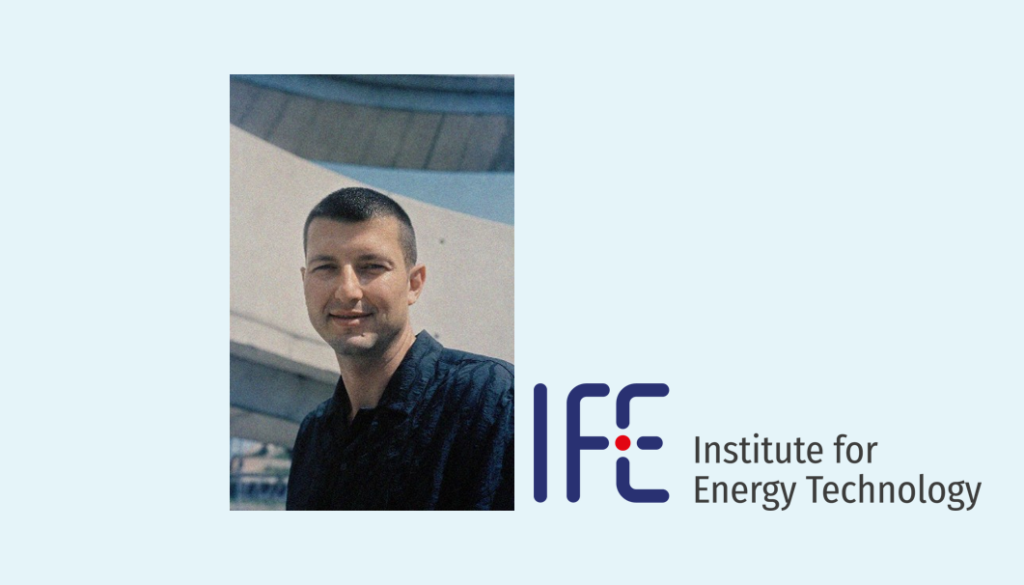
I am chemical engineer with a PhD in Catalysis. I am working as a researcher at the Institute for Energy Technology (IFE), Norway. My work focuses on catalyst and sorbent development, material testing under relevant industrial conditions, and process intensification for sustainable fuels and chemicals production. In the IsoPROPEL project, I contribute to WP2, where I am involved in the development, characterization, and testing of advanced catalysts and water sorbents for sorption-enhanced DME synthesis processes.
What was your original motivation to become a researcher?
My original motivation to become a researcher came from a curiosity about how things work and a desire to solve real-world problems. During my studies in chemical engineering, I became particularly interested in understanding the fundamental principles behind chemical processes and developing technologies that can contribute to a more sustainable future. Research offered the opportunity to combine scientific curiosity with practical impact, which continues to motivate me today.
What is your (main) research area today?
Today, my research focuses on developing advanced catalytic materials and sorbents for gas conversion and separation processes. I am particularly interested in CO₂ utilization, renewable fuel and chemical production, sorption-enhanced processes, and the integration of novel materials with intensified reactor systems to improve efficiency and sustainability.
What is the main objective of your team in IsoPROPEL?
We are part of Work Package 2, where our main task is to develop, characterize, and test advanced catalysts and water adsorbents for the production of dimethyl ether (DME) from CO₂. Our work focuses on implementing a sorption-enhanced process concept, where water formed during the reaction is continuously captured by dedicated adsorbent materials. By removing water, the equilibrium is shifted towards the products, enabling higher CO₂ conversion and increased DME yields. This work aims to make the process more efficient and economically attractive.
What expertise and facilities does your team have to meet those objectives?
Our team has extensive expertise in catalyst and adsorbent development, synthesis, characterization, and testing under relevant reaction conditions. We have laboratory facilities for material synthesis and characterization, adsorption measurements, and high-pressure fixed-bed reactor testing. In addition, we have been involved in several national and international projects focused on sorption-enhanced processes and have published scientific papers on sorption-enhanced reactions. This experience provides a strong foundation for developing and evaluating the catalyst and sorbent materials required for sorption-enhanced DME production in IsoPROPEL.
Which aspects of your research at IsoPROPEL do you believe are the most innovative and what unique opportunities offer IsoPROPEL to yourself and/or your organisation?
For IFE, IsoPROPEL offers a unique opportunity to further advance our expertise in sorption-enhanced technologies and to apply our experience from previous research projects to a new and highly ambitious value chain. The project brings together leading European partners with complementary expertise, providing access to new knowledge, facilities, and collaborations. It also allows us to validate our materials and concepts within a larger integrated process for the production of sustainable energy carriers, like IsoPropel. It also creates opportunities for joint scientific publications, future project development, and long-term international collaboration.
How do you see the future use of the IsoPROPEL results and the impact of IsoPROPEL project in our daily lives?
The future impact of IsoPROPEL could be the deployment of isopropanol as a renewable energy carrier for shipping and other hard-to-electrify sectors. Compared with hydrogen or ammonia, isopropanol is easier to store and transport because it remains liquid under ambient conditions. If successfully integrated with fuel cell technologies, it could provide a practical pathway to low-emission maritime transport while taking advantage of existing fuel infrastructure and reducing harmful emissions such as CO₂, NOₓ, and soot.