
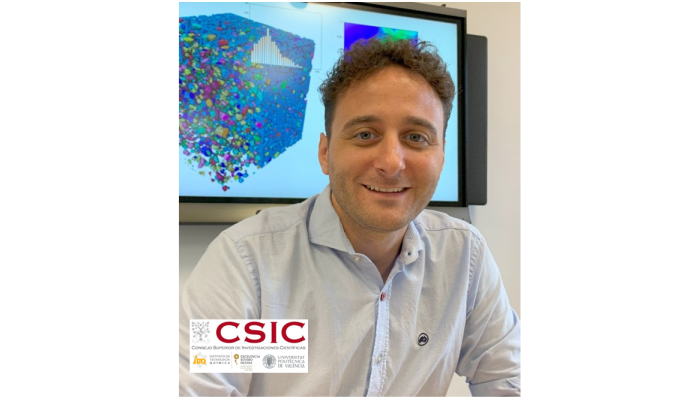
I am a chemical engineer by training and a researcher at ITQ (Institute for Chemical Technology), a joint research center of the Spanish Research Council (CSIC) and the Polytechnic University of Valencia. I am the coordinator of the IsoPROPEL project. In this role, I contributed to shaping the project concept, assembling the excellent consortium, and negotiating the Grant Agreement. Now that the project is underway, I help ensure that the implementation stays on track, that objectives are achieved on time and as planned, and that technical risks are identified early and properly mitigated.
On the technical side, my research team is a key contributor to WP2, where we develop materials and process concepts for sorption-enhanced and tandem catalysis. These approaches aim to enable the selective valorization of renewable C1 feedstocks into the C3 liquid energy carriers that the project seeks to demonstrate as a promising contribution to the defossilization of waterborne transport.
What was your original motivation to become a researcher?
I have always been fascinated, since my BSc studies, by understanding how the phenomena that we, engineers, aim to model macroscopically, actually occur at the molecular and atomic scales. That curiosity was a strong motivation for me and ultimately led me to pursue a PhD in catalysis. Alongside this curiosity and drive for fundamental understanding, another aspect of the research career that has been very meaningful to me is the opportunity to live and work in different countries.
As a researcher, I had the chance to spend more than nine years abroad, experiencing different cultures and scientific environments. I find that to be a very enriching dimension of the profession, and it is something I still greatly value today.
What is your (main) research area today?
The group I lead at ITQ (CSIC) develops new materials and catalytic concepts aimed at connecting emerging, low-environmental-footprint raw materials with existing value chains in the chemical and energy industries. To achieve this, we combine expertise in materials design and precision synthesis with advanced characterization techniques, including tomographic imaging, 3D image quantification, and operando spectroscopies, often making use of large research infrastructures such as synchrotron facilities. We complement this, as rational an approach to materials development as possible, with catalytic testing under industrially relevant conditions, as well as process modelling and techno-economic assessment. In this way, we aim to take a holistic approach to technology development and help move promising concepts closer to industrial adoption.
What is the main objective of your team in IsoPROPEL?
At IsoPROPEL, in addition to contributing to the overall project coordination, my research team plays a key role in WP2, where catalyst and sorbent materials, as well as process concepts for sorption-enhanced and tandem catalysis, are developed and validated at TRL4. The objective is to further refine a recently discovered and patented route for the selective conversion of renewable C1 feedstocks into C3 liquid, cyclically reusable energy carriers, which the project aims to demonstrate as a promising contribution to the defossilization of waterborne transport.
What expertise and facilities does your team have to meet those objectives?
We have solid experience in materials synthesis and modification, physicochemical characterization, also using advanced structural techniques as mentioned above, and catalytic testing. Our institute is a global front-runner in catalysis R&D and is exceptionally well equipped to design newcatalyst materials and expose them to industrially relevant operating conditions. This allows us to better understand their working state, stability, and dynamic behavior under realistic environments. For IsoPROPEL, we additionally make use of emerging electrified reactor concepts, which offer a different and highly dynamic way of supplying energy to catalytic processes.
Which aspects of your research at IsoPROPELdo you believe are the most innovative and what unique opportunities offer IsoPROPELto yourself and/or your organisation?
Traditionally, C1 catalysis has followed two main pathways: either retaining oxygen functionality in the products, as in the synthesis of methanol, or promoting largely unselective chain growth into a broad range of hydrocarbons, as in Fischer–Tropsch synthesis, typically at the expense of retaining little or no oxygen in the products. The tandem catalysis process that we are refining in IsoPROPEL breaks with this dichotomy. It enables selective chain growth specifically to C3 products while retaining oxygen in their structure. This makes the resulting product pair (acetone and isopropanol) particularly interesting as liquid hydrogen carriers.
Beyond the scientific and technological impact, the success of IsoPROPEL would also support the valorization of the intellectual property that our group has developed in recent years on catalytic transformations enabling this selective C1-to-C3 chain growth into condensed, oxygenated energy carriers.
How do you see the future use of the IsoPROPELresults and the impact of IsoPROPELproject in our daily lives?
If, in the future, ships were to operate using the direct isopropanol fuel cell concept developed in the project, they would produce no CO₂ or other tailpipe emissions, unlike vessels running on hydrocarbon fuels, methanol, or DME alternatives. At the same time, they could benefit from simpler onboard systems and lower space requirements compared with hydrogen or ammonia-based solutions, which, even if carbon-free, are not liquid under ambient conditions and are much more challenging to store and handle safely. Such an approach could therefore combine operational simplicity with substantial emissions reductions, not only in terms of greenhouse gases but also by eliminating other harmful local pollutants such as soot and NOₓ, which are a major concern in populated areas with heavy inland waterway traffic.